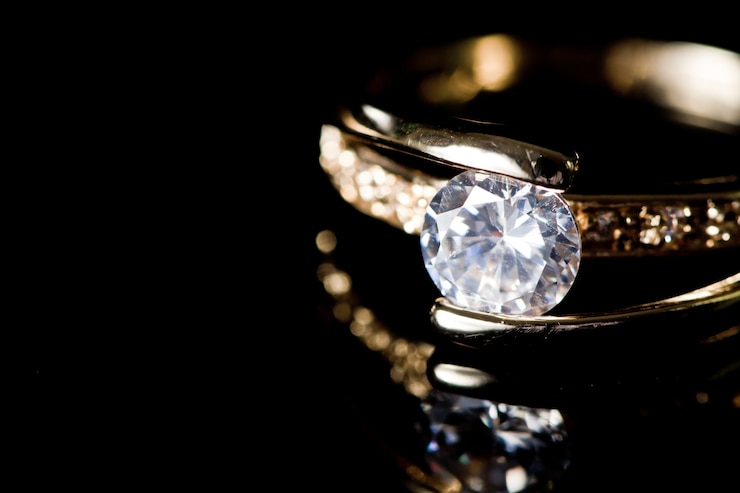
A diamond ring does not have to start with a finished design. Some people prefer to choose the stone first, then decide how the jewellery should look around it. This gives them more control over the shape, size, setting, and overall appearance.
Loose lab created diamonds are particularly useful for this approach. Since the stones have not yet been mounted, buyers can examine their proportions and compare different options before committing to a design.
In Singapore, where engagement rings and personalised jewellery are popular choices for important occasions, selecting a loose diamond allows buyers to focus on the details that matter to them.
Table of Contents
Why Loose Lab Created Diamonds Offer More Design Freedom
A loose diamond is simply a stone that has not been placed into a ring, pendant, or other piece of jewellery. It can be examined from several angles, making it easier to assess its shape and visible characteristics.
Laboratory-grown diamonds have the same chemical composition and crystal structure as natural diamonds. The main difference is their origin. One forms naturally underground, while the other grows under controlled laboratory conditions.
Buyers looking at Novita Diamonds Singapore can consider the loose diamond and its future setting as separate decisions, rather than limiting their search to completed jewellery.
This approach is useful for anyone interested in a custom engagement ring or a pendant with specific proportions.
Diamond Shape Changes More Than Appearance
Two diamonds with the same carat weight can look noticeably different once placed on a finger.
Round brilliant diamonds have a balanced outline and are cut to produce strong sparkle. Oval diamonds often appear longer, which can create a slender look on the hand. Emerald cuts have broad, step-like facets that produce a different pattern of reflections.
Pear, cushion, radiant, and princess cuts offer further design possibilities.
A diamond’s measurements also deserve attention. An elongated stone may appear larger from above than a deeper stone of similar weight.
For Singapore buyers comparing lab made diamonds online, checking the length, width, and depth provides more useful information than relying on carat weight alone.
Loose Lab Created Diamonds and the Importance of Cut Quality
A large diamond does not automatically produce impressive sparkle. Its cut affects how light travels through the stone and returns to the viewer.
Poor proportions can allow light to escape, leaving parts of the diamond looking darker or less lively.
For round brilliant diamonds, cut grades provide a helpful starting point. Fancy-shaped diamonds require closer visual inspection because their appearance can vary considerably.
Look at videos recorded under different lighting conditions when possible. A diamond that looks bright under strong showroom lights may appear different in ordinary daylight.
It is also worth comparing stones side by side instead of choosing one based on a single photograph.
Colour and Clarity Without Unnecessary Spending
Diamond colour describes the presence or absence of visible body colour. Clarity refers to internal features and surface characteristics.
Many buyers assume they need the highest possible grades. However, small differences between neighbouring grades are not always easy to notice without magnification.
A diamond with minor inclusions that cannot be seen easily by the naked eye may suit an everyday engagement ring.
The metal setting can also influence colour perception. White gold and platinum create a different visual contrast from yellow or rose gold.
Retailers such as Novita Diamonds Singapore can be useful starting points when comparing stone specifications alongside jewellery design preferences.
Rather than paying for grades purely because they sound impressive, consider how the diamond actually looks.
Check the Grading Report Before Buying
Independent grading documentation helps buyers understand what they are purchasing.
Reports from the International Gemological Institute (IGI) can include diamond measurements, carat weight, colour, clarity, and cut information. They also identify whether a diamond is laboratory-grown.
The Gemological Institute of America (GIA) introduced a different assessment approach for colourless to near-colourless laboratory-grown diamonds in October 2025, using Premium and Standard quality categories.
Because laboratories use different reporting formats, buyers should avoid comparing grades without checking the issuing organisation.
A report number can also be checked through the relevant grading laboratory’s verification service.
Consider the Setting Before Choosing Carat Size
A diamond may look attractive on its own but still need a suitable setting to achieve the intended appearance.
A solitaire ring places attention on one central stone. A halo design surrounds the diamond with smaller stones, while a bezel setting uses a metal rim around its edge.
For everyday wear, the setting should provide adequate protection and remain comfortable.
Someone who frequently works with their hands may prefer a lower-profile design instead of a tall setting that catches on clothing.
The jewellery’s proportions matter too. A large centre stone on a very thin band may require additional structural support.
Buying Loose Diamonds in Singapore: Details Worth Checking
Before making a purchase, ask about the complete cost of the finished jewellery, not only the diamond itself.
Setting charges, precious metal choice, ring sizing, and possible design changes can affect the final amount.
Singapore buyers should also confirm whether quoted prices include GST and whether the retailer offers resizing, maintenance, or after-sales support.
Novita Diamonds Singapore is one option to consider when researching laboratory-grown diamond jewellery. Comparing its offerings with other retailers can help buyers assess available shapes, specifications, and design options.
For customised pieces, request clear confirmation of the selected diamond’s measurements and how it will fit the proposed setting.
Keep the Diamond’s Future Use in Mind
An engagement ring is not the only reason to purchase a loose stone.
A round diamond can work well in a simple pendant, while an oval or pear-shaped stone may suit a more distinctive necklace design. Matching stones can also be selected for earrings.
If the jewellery may be redesigned later, a classic shape can offer flexibility across different settings.
Ultimately, the most useful comparison is between diamonds that meet the intended design, appearance, and budget. A carefully selected stone with balanced proportions and suitable documentation is often more valuable to the buyer than a higher grade that makes little visible difference.